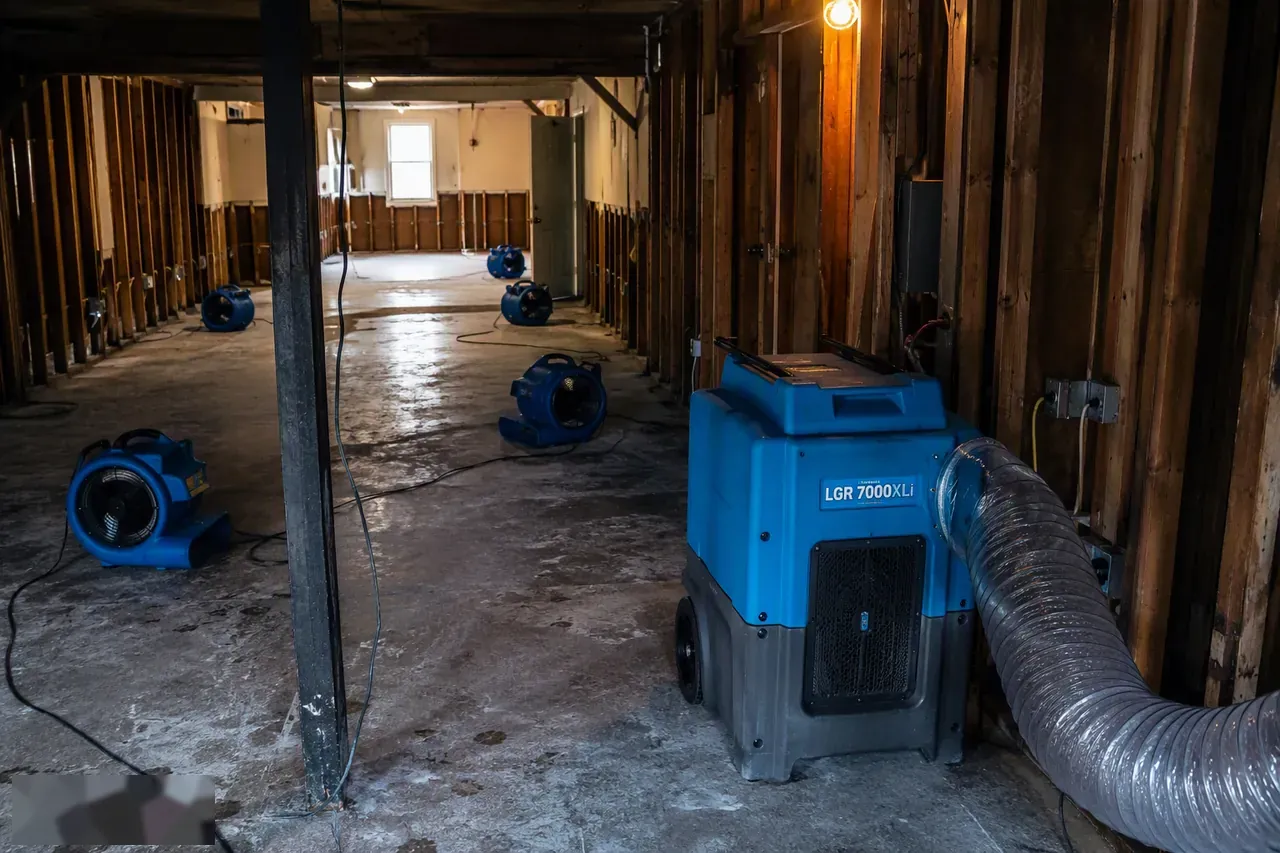
Professional Structural Drying & Moisture Removal
Removing visible water does not mean the structure is dry. Moisture can remain inside drywall, framing, subfloors, insulation and other materials — and that's what we measure and remove.
Why Pumping Water Out Isn't Enough
Standing water is the obvious problem. The hidden one is moisture absorbed into building materials — inside wall cavities, under flooring, in sill plates and subfloor decking. Left there, it keeps damaging the structure and creates conditions for mold growth long after the floor looks dry.
Professional structural drying is a measured process: we establish how wet materials actually are, dry them against a target, and prove the result with readings — not with "it feels dry."
The Equipment and the Process
- Moisture meters — to map how far water traveled and set the drying target
- Commercial air movers — high-volume directed airflow across wet surfaces
- LGR dehumidification — low-grain refrigerant dehumidifiers that pull moisture out of the air as materials release it
- HEPA air filtration — where demolition dust or conditions call for it
- Daily moisture readings — equipment adjusted based on measured progress
- Drying documentation — a logged record showing materials reached dry standard
Had water in the last 48 hours? The drying window is now — call before moisture migrates further.
Call NowDaily Monitoring and Adjustments
Drying is not set-and-forget. We return daily to take readings, reposition air movers, and adjust dehumidification as materials release moisture at different rates. Framing, subfloor and drywall don't dry on the same schedule — the readings tell us when each is done.
Drying Documentation
When the job finishes, you have a documented record: initial moisture map, daily readings, and final confirmation that materials reached dry standard. For insurance claims, this is the difference between "we ran some fans" and a defensible drying job. It also tells our construction team the structure is genuinely ready for rebuild — new drywall and flooring should never go over a wet structure.
After the Drying
Need Your Property Put Back Together?
Drywall, flooring, painting, cabinets, trim, roofing — one crew for the rebuild, with photos-based estimates to start.
Common Questions
Structural Drying Questions
How do you know when a structure is actually dry?
We take daily moisture readings with meters against unaffected reference material, and only consider a structure dry when readings return to normal, documented range — not on a fixed timeline.
Will I need to leave the property during drying?
Usually not for residential drying — equipment runs continuously, but most homeowners stay in unaffected parts of the home. It can be noisy; we'll walk you through what to expect for your specific setup.
What happens if materials don't dry in time?
Materials that stay wet too long — especially drywall, insulation and subfloor — often can't be saved and need to be removed rather than dried, to prevent mold growth. We'll tell you honestly when that's the case rather than drying something that should come out.
Water in Your Property?
The Longer Materials Stay Wet, the Worse the Damage
Contact our emergency response team now. We'll tell you what to do in the next ten minutes — and dispatch a crew if you need one.
Call (765) 686-9976