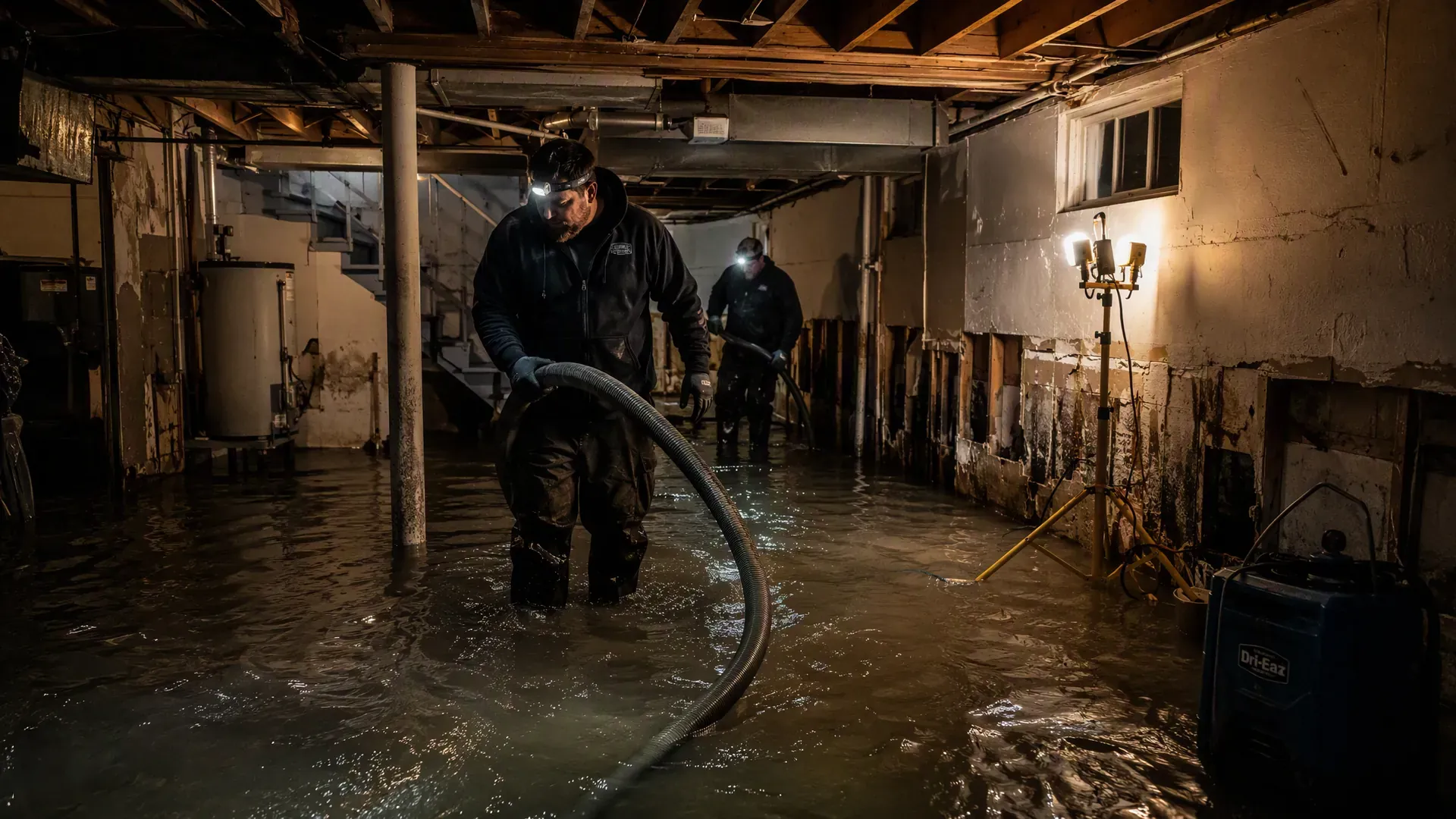
Emergency Flood Cleanup
Basement flooding, stormwater intrusion, sump pump failures and groundwater — we remove the water, the damaged materials and the debris, then dry the structure.
What Flood Cleanup Actually Involves
Flood cleanup is more than pumping water out. A proper response covers the full sequence: safety check, extraction, removal of materials that can't be saved, debris removal, and then measured drying of the structure that remains.
- Basement flooding and standing water removal
- Stormwater intrusion through foundations, windows and doors
- Sump pump failures and backups
- Groundwater intrusion after prolonged rain
- Wet carpet, pad and damaged drywall removal
- Insulation removal where saturated
- Debris removal and disposal
- Structural drying with daily moisture monitoring
Water still coming in? Call first — we'll help you stabilize the situation before we arrive.
Call NowNot Every Flood Is the Same
We don't treat every flood situation identically, because the water itself changes the job. A clean supply-line leak, a sump pump failure and storm-driven floodwater each carry different contamination levels — and the proper mitigation process changes with them.
Stormwater and groundwater that have traveled across soil, streets or fields are handled as potentially contaminated. That affects what can be dried in place, what must be removed, and how we protect the rest of the house while we work. When you call, we'll ask a few direct questions about where the water came from so the crew arrives with the right plan and equipment.
Storm Damage Response
Heavy rainfall, wind and severe weather can open a property up in several ways at once — roof damage, siding breaches, overwhelmed drainage and flooded lower levels. We respond to storm losses across Central Indiana with water extraction, emergency material removal and drying, and our construction team handles the exterior repairs afterward.
Storm hit your property? Send photos and we'll assess the response needed.
Text PhotosDocumentation for Your Insurance Claim
We photograph conditions before, during and after mitigation, and log moisture readings daily until the structure reaches dry standard. If you've opened an insurance claim — or plan to — that documentation matters. If you haven't called your carrier yet, call us first anyway: stopping the damage comes before paperwork.
After the Drying
Need Your Property Put Back Together?
Drywall, flooring, painting, cabinets, trim, roofing — one crew for the rebuild, with photos-based estimates to start.
Common Questions
Flood Cleanup Questions
What's the difference between flood cleanup and water extraction?
Extraction is the first step — removing standing water. Flood cleanup covers everything after: removing damaged materials that can't be dried (soaked drywall, carpet, pad, insulation), debris disposal and preparing the structure for drying equipment.
Is it safe to clean up floodwater myself?
It depends on the source. Clean rainwater in a basement is lower-risk if you avoid electrical hazards. Water that may contain sewage or has been sitting for more than 24-48 hours should be treated as contaminated — stay out and call a professional rather than handling it yourself.
How do you handle debris and damaged material disposal?
Wet drywall, flooring, insulation and other unsalvageable materials are removed, bagged or hauled out, and disposed of properly as part of the cleanup — clearing the way for drying equipment and, later, reconstruction.
Water in Your Property?
The Longer Materials Stay Wet, the Worse the Damage
Contact our emergency response team now. We'll tell you what to do in the next ten minutes — and dispatch a crew if you need one.
Call (765) 686-9976